
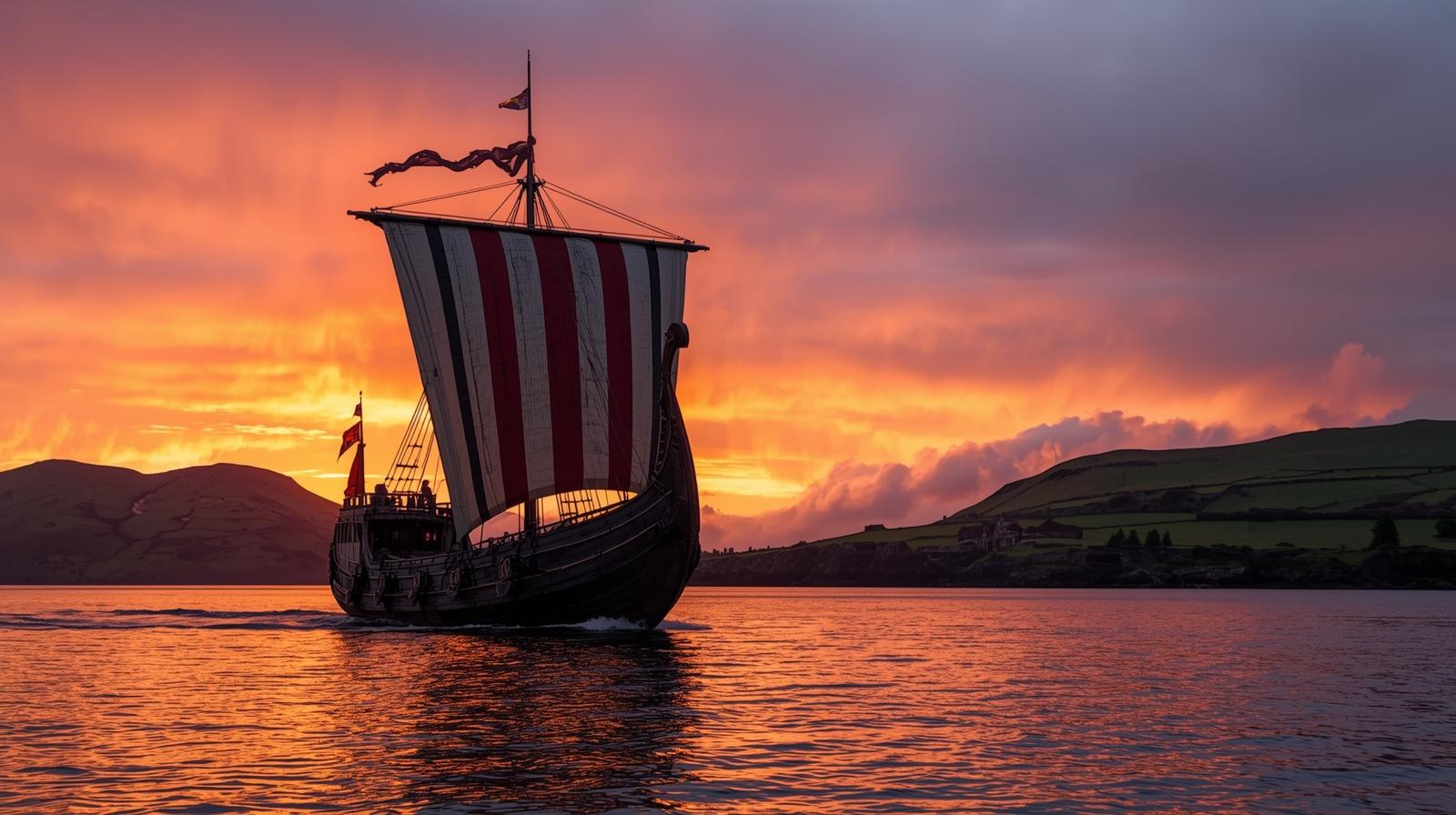
⚔️ Introduction: When the Vikings Came Calling
Picture it: the year is 795. Longships glide through misty Irish waters. Locals stare, slightly unimpressed.
The Vikings have arrived.
What started as a few raids soon turned into trade, towns, and a whole lot of intermarrying.
At Valhalla Tours, we say Ireland didn’t just survive the Vikings — it absorbed them. And we’ve been telling their stories (and stealing their hairstyles) ever since.
🛶 1. From Raiders to Residents
At first, the Vikings came for treasure. Then they realised Ireland had better farmland, friendlier people, and fantastic beer.
So they settled — especially in Dublin, Wexford, Waterford, Cork, and Limerick, founding cities that still bear their Norse fingerprints.
💡 Valhalla Tip: Visit Dublinia, where you can walk through a recreated Viking village (no axe required).
🗺️ 2. Dublin: The Viking Capital
The word Dublin comes from Dubh Linn, meaning “black pool.”
It was once a bustling Viking port full of traders, craftsmen, and the occasional brawl over sheep.
Today, Dublin is still a hub of energy — though the weapons are mostly smartphones.
🪓 3. Viking Influence on Irish Culture
They left more than place names and silver hoards — they brought shipbuilding, urban planning, and the concept of Saturday baths (you’re welcome).
Many Irish surnames still carry Norse roots — Doyle, MacAuliffe, McManus — meaning “descendant of the foreigner.”
🍻 4. Where to Walk in Viking Footsteps
- Waterford’s Reginald’s Tower: Ireland’s oldest civic building.
- Wexford’s Viking Triangle: Culture, coffee, and Norse artefacts galore.
- Limerick’s King John’s Castle: Viking foundations still stand beneath the stones.
👉 Read The Viking and the Gael to see how Ireland’s identity grew from this clash of worlds.
⚓ Conclusion: The Vikings Never Really Left
Their longships are gone, but their spirit remains — in our language, our legends, and our love of a good saga.
So raise a horn (or a pint) to the raiders who became neighbours.
And if you feel a sudden urge to braid your hair… well, that’s heritage.